
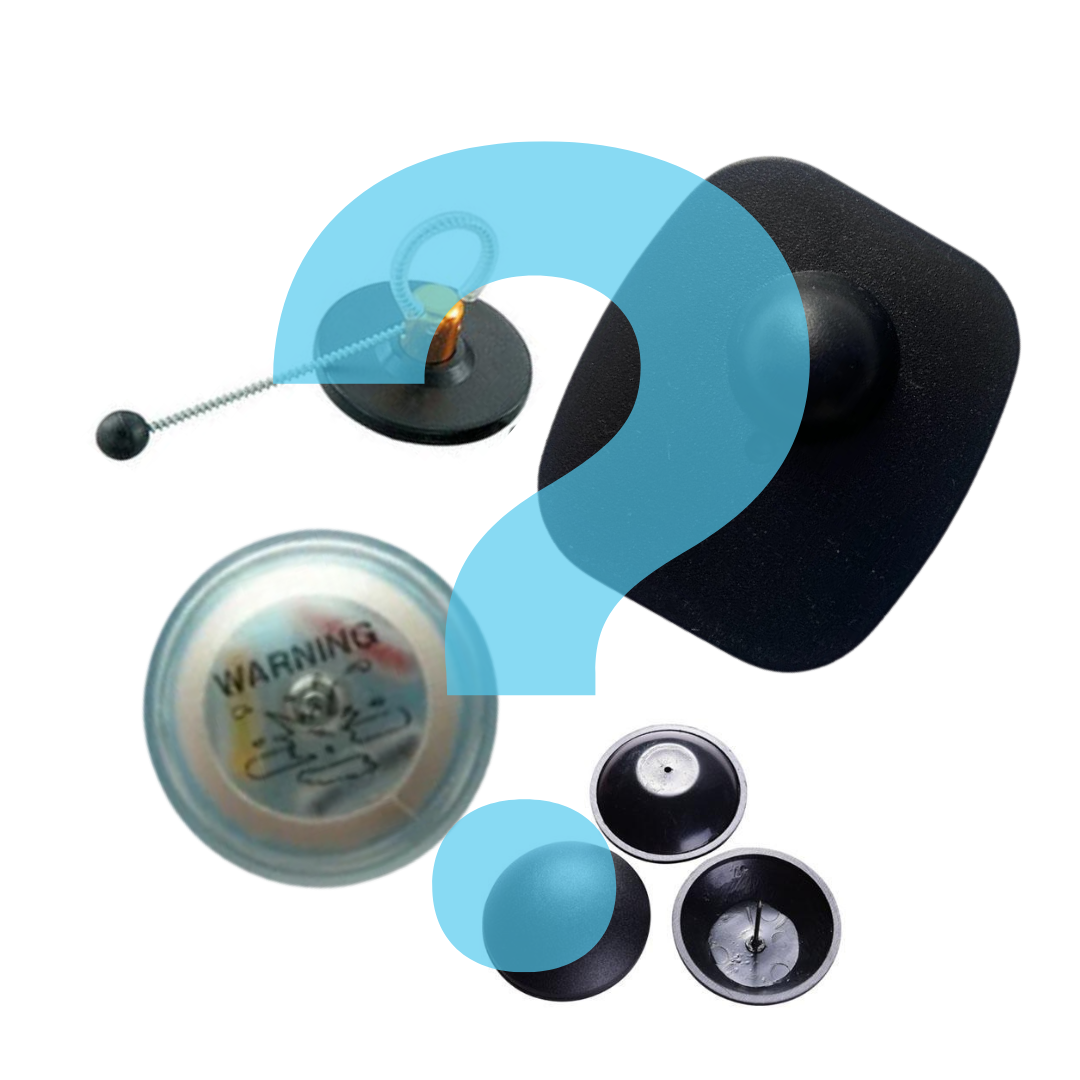
Security tag myths: separating fact from fiction
Security tags are widely used in retail, but they are often described too broadly. The important distinctions are whether the product is an EAS tag, a visual deterrent, a benefit-denial tag, or a self-alarming device—and whether its frequency matches the store's entrance system.
Myth 1: Security tags are only for large retailers
Fact: EAS can be used by small independent stores as well as large chains. The appropriate setup depends on the entrance, merchandise and budget. A standard single doorway can often begin with one antenna, while an entrance about 6 feet wide or wider generally benefits from two antennas, one on each side.
Myth 2: Every security tag works with every EAS system
Fact: Frequency compatibility matters. RF 8.2MHz tags are intended for RF 8.2MHz systems, while AM 58kHz tags are intended for AM 58kHz systems unless a product explicitly states otherwise. INEO Clarity operates at RF 8.2MHz.
Browse RF 8.2MHz Tags and Labels or AM 58kHz Tags and Labels.
Myth 3: All ink tags will trigger an EAS alarm
Fact: Ink tags are primarily benefit-denial products. Some may include EAS technology, while others are non-alarming physical deterrents. Always check the product specification. Browse INEO Ink Tags.
Myth 4: A hard tag is always better than a label
Fact: Hard tags and labels solve different problems. Reusable hard tags are well suited to apparel and other merchandise where a physical tag can be attached. Adhesive labels can be a better fit for packaged goods, pharmacy, cosmetics and other high-volume products.
Read Tags vs Labels - Which One Should You Use?.
Myth 5: The largest tag automatically gives the best detection
Fact: Detection depends on frequency, antenna layout, tag design, product placement, merchandise and site conditions. Select a tag for compatibility and application rather than size alone.
Myth 6: Security tags are a complete loss-prevention strategy by themselves
Fact: EAS works best as one layer alongside staff training, store layout, inventory procedures, video and other controls appropriate to the retailer.
Myth 7: Any unexpected alarm means shoplifting
Fact: An EAS alarm indicates that the system detected a compatible active tag or label. Possible causes include an unpaid protected item, a tag or label that was not removed or deactivated at checkout, tag pollution from another retailer, or active merchandise positioned too close to the entrance.
Read The 6 Things You Need To Know About Your Security Tag Alarms.
Choose products based on the store
Browse INEO Security Tags, Security Labels, and Complete EAS Systems and Starter Packages.
For help confirming the right frequency, tag or entrance layout, contact INEO sales at apannu@ineosolutionsinc.com.